
Get started with our free SIC Literature Review.
Whether you’re a team of 1 or 100,000, we’ve put together the fundamentals for getting access and inclusion right, from the start.
Because cost shouldn’t be a barrier to access.
The disabled community is often told that making adjustments is too expensive or that Learning and Development take too much time. That’s why we created the SIC 2026 Literature Review: a free, evidence-based guide to help you move from good intentions to confident action.
SIC’s 2026 Literature Review for inclusive workplaces.
Our mission is to help close the disability employment gap by supporting employers to build inclusive, accessible workplaces where everyone can thrive. But we understand that knowing where to start — and what actually works — is often the hardest part.
Our 2026 Literature Review is the best way to begin. Authored by Sarah Jassim, Morgan Roberts, Armin Grosche and Zara Umar from the University of Birmingham, it’s designed to be practical, accessible and relevant to UK employers.
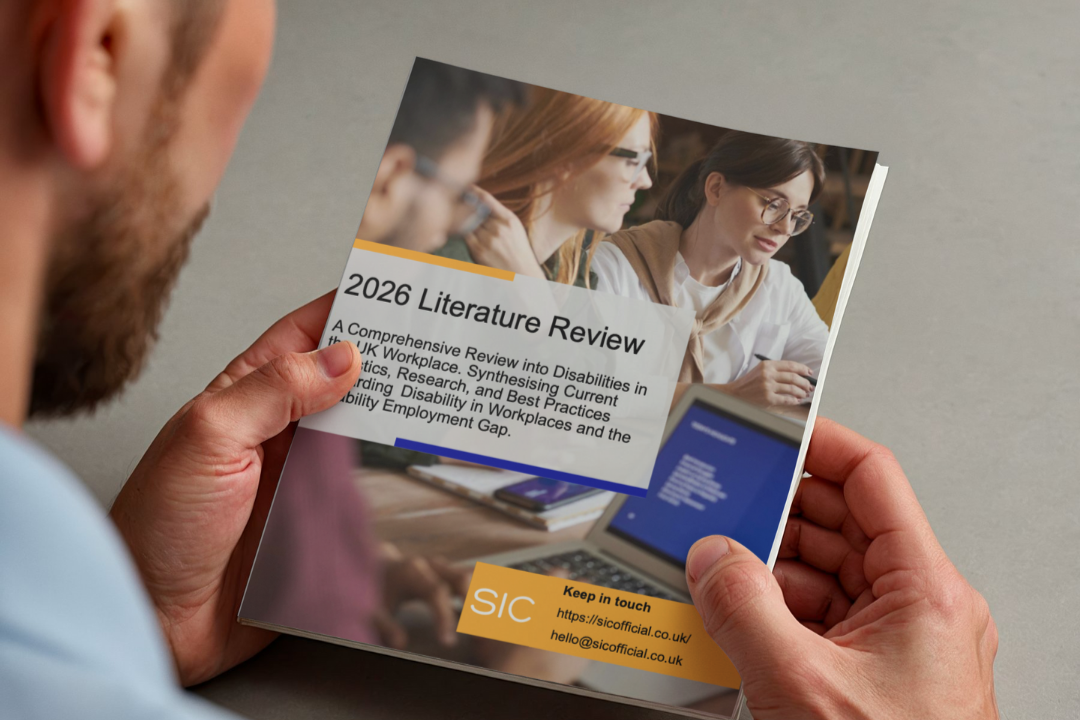
What does the review cover?
This free resource brings together academic research, policy guidance and real-world examples to answer a simple but important question:
Why do workplace barriers persist for disabled employees — and what helps to remove them?
Rather than focusing on individuals, the review looks at how workplace systems, cultures and management practices shape employee experiences, and where employers can have the greatest impact.
Why the review is useful for employers.
SIC’s Literature Review will guide you through ways to move beyond tick-box compliance and towards meaningful inclusion.

What you’ll learn:
Understand your legal responsibilities and common areas of risk
Learn why reasonable adjustments often go unrequested
Identify what makes adjustments effective in practice
Find out about the role managers play in creating inclusive workplaces
These learnings are based on:
Key trends shaping disability and employment in the UK
Evidence on disclosure, reasonable adjustments and flexible working
Insight into recruitment and progression barriers
Case studies from public and private sector organisations
Clear, research-backed best practice recommendations
From advice, to action, to creating real inclusion.

Inclusive workplaces aren’t built overnight. They’re created through informed decisions, consistent practice and a willingness to listen and adapt.
Our free SIC Literature Review gives you the clarity and confidence to take the next step — whatever stage your organisation is at.