
Theatre as an art form is incredibly powerful. Not only can it provide a means of escape, but it can also be a hugely effective learning tool that can spark real change in society. Theatre is reactive to society. Society is reactive to the theatre.
The theatre as an industry also employs and provides for a vast pool of people. From actors to producers to lighting designers to individual audience members.
Currently, the theatre industry is simply not accessible for almost one in four of us in the UK who identify as disabled.
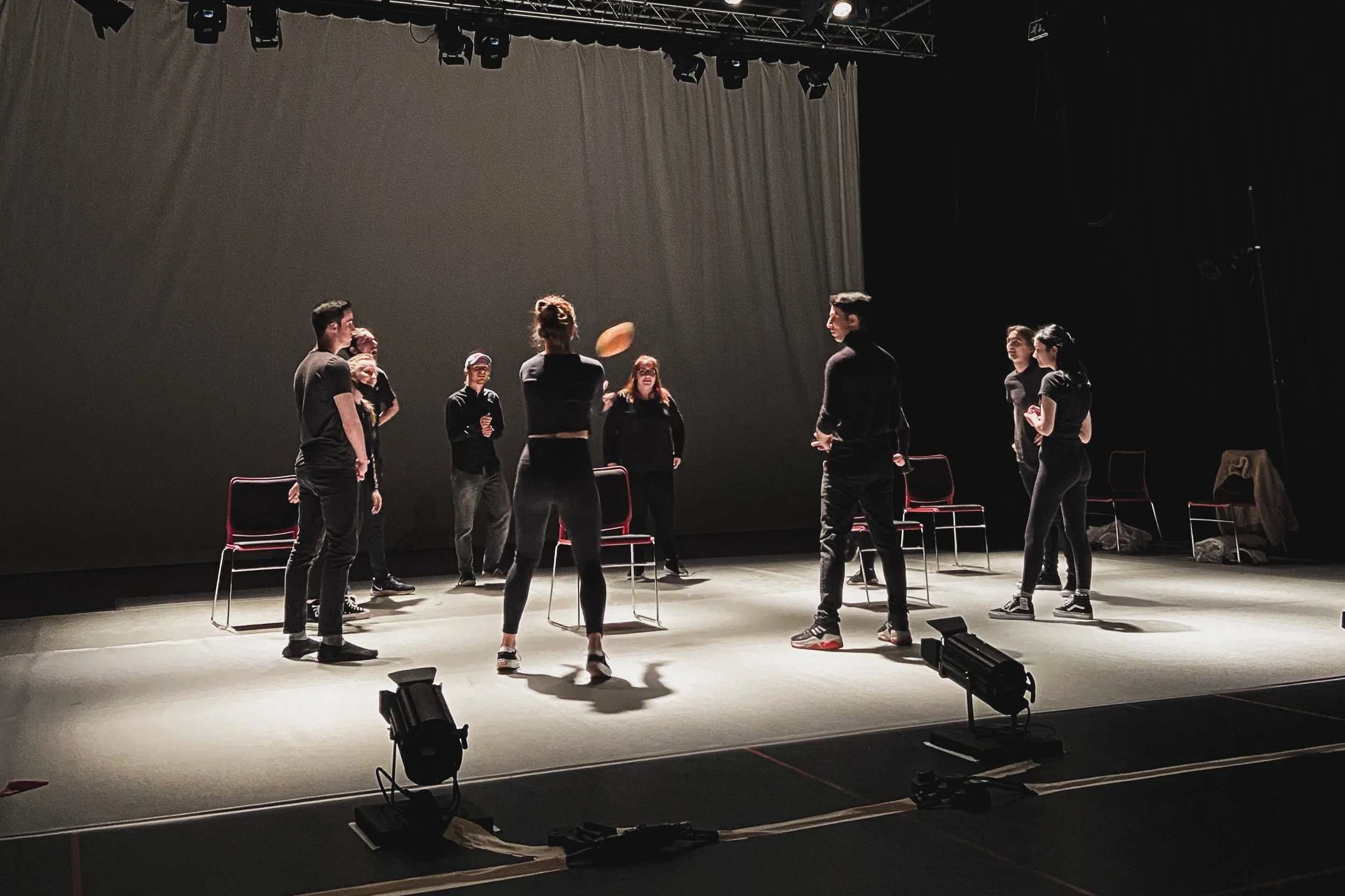
(A group of people dressed in black, stood on a stage facing each other)
What the numbers say about access in the theatre industry
Only 3 in 10 UK theatres list one or more access services for an upcoming production (audio description, BSL performances, captioning, dementia-friendly and relaxed performances), which means that 7 out of 10 shows can't be accessed by certain disabled audiences. 7 out of 10 shows are missing out on the custom of a community with a spending power of £ 274 billion a year.
With the 3 in 10 shows that do offer an access service, they can often happen just once or twice in a whole run of a show.
The National Theatre's run of Shakespeare's Othello (which ran from November 2022 to January 2023) had 62 performances in total. Of those 62 performances, there were 2 captioned performances, 2 audio-described performances with a touch tour, 1 BSL-interpreted performance and 1 relaxed performance. That's 6 shows in total that provided an access service.
(Two actors in the National Theatre’s Othello, holding one hand up to each other with serious facial expressions)
If someone with a visual impairment wanted to go to this production of Othello, they could only go on 21st December at 2 pm, or 14th January at 2 pm.
The impact of no access in the theatre
Separating disabled theatre-goers from non-disabled theatre-goers, and limiting the amount of theatre disabled theatre-goers can consume, fuels a segregated industry. It's a similar argument for a venue having its accessible entrance separate from its 'main' entrance (with the accessible one usually tucked away at the back of the building, usually by the bins). What sort of message is this sending to disabled people?
If that same person with a visual impairment couldn't make it on 21st December at 2 pm, or 14th January at 2 pm, they simply never will experience the NT's production of Othello.
Have you considered your show’s access?
Often, the shows that do offer an access service aren't even given the same creative attention as the 'main' version of the show, which adds to this idea that theatre isn't for disabled people.
At Leeds Playhouse's Symposium event Access Shouldn't be an Afterthought in 2022, visually impaired actor and director Ben Wilson said "There is a vast amount of directors who haven't even listened to their own show's audio description. [...] The most disabled I ever feel is at the theatre, and I find that heartbreaking".
A 2021 report on Theatre Access by VocalEyes states "The onus should not be on disabled people. If we are to live up to the values enshrined in the Equality Act, it should be the urgent collective duty of everyone working in the arts and creative industries to take ownership of embedding and enforcing the social justice that it represents".
Also speaking at Leeds Playhouse's event was producer Paul Wilshaw, who said "It's not the duty of deaf and disabled people to justify their own rights. It's exhausting. You should feel heard and safe in theatres and should enjoy being there. Too many theatres are not accessible and it's very boring facing the same barriers day in and day out".
(A group of actors onstage from Leeds Playhouse’s Oliver dressed in Victorian style clothing, crowded around and pointing at character Oliver who is sat on a box)
Paul's words ring all too true. Too long have disabled people been the ones to point out the barriers, to ask for things to be put in place in order for them to access what non-disabled people can with no questions asked.
It's time for theatre organisations, large and small, to take accountability for their lack of value for their disabled customers and take real action on what can be done to fix the wider issue at hand.
Speak to and work with disabled artists (check out our Career Spotlights with Bryony Moss and Sol Woodroffe), learn from the theatre creatives paving the way with integrated access (such as Amy Leach, Robert Hastie, and Caroline Parker MBE to name a few), and be ready to completely rethink your approach to theatre making (have you downloaded our Accessibility Rider Template?).
Access shouldn't be an afterthought. Access should be there from the get-go.
The solution
If you’d like to discuss creating more accessible art, SIC runs a number of workshops with theatre companies, fringe festivals, and arts organisations. We can cover subjects including disability, neurodiversity, creative access, and accessibility in inaccessible venues.
Read more here about the accessibility in theatre training we offer.
Want to have a chat? Book a call with our CEO Alice Hargreaves here.